
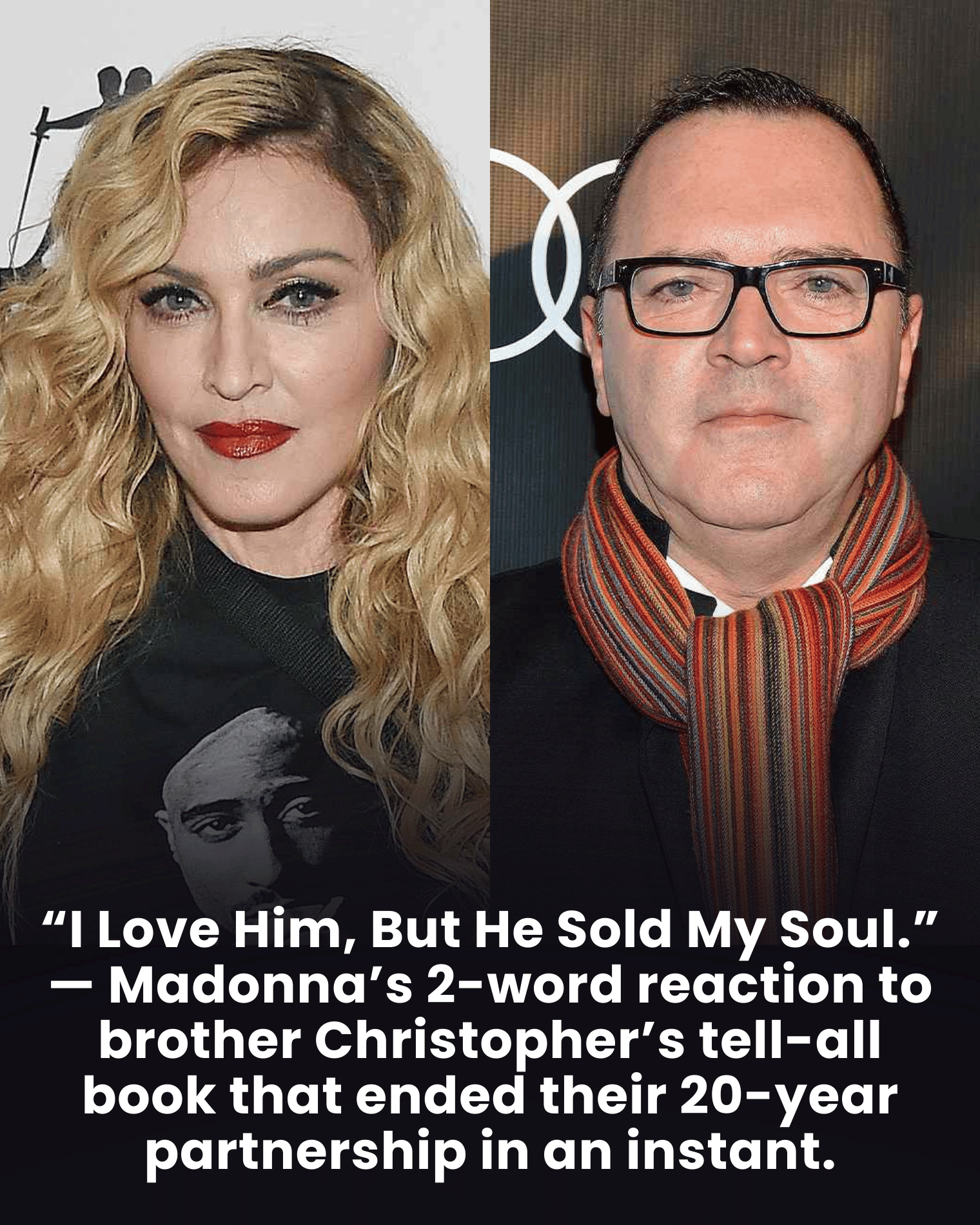
For years, Madonna and her younger brother Christopher Ciccone were inseparable. Long before global superstardom reached its peak, Christopher was by her side—first as a trusted confidant, then as a creative partner helping shape the spectacle that defined her tours. He worked as her dresser, appeared as a backup dancer, and eventually took on the demanding role of tour director. In the high-voltage universe of Madonna's career, he was not just family; he was part of the machinery that kept the empire running.
Their partnership thrived during some of the most transformative years of her reign as the Queen of Pop. Christopher had a front-row seat to the ambition, discipline, and relentless drive that propelled his sister to cultural dominance. But proximity to power can be complicated. As Madonna's fame expanded, so did the pressure, the expectations, and the emotional distance that often comes with operating at the top of the entertainment world.
Everything shifted in 2008 when Christopher released his memoir, Life with My Sister Madonna. The tell-all detailed private family dynamics and painted an unfiltered portrait of Madonna's personality behind closed doors. He wrote about alleged tantrums, control issues, and frugality that contrasted sharply with her glamorous public image. For readers, it was scandalous and irresistible. For Madonna, it was a rupture.
When asked about the betrayal, her reaction was said to be heartbreakingly blunt: "Dead to me." Two words that signaled not just professional fallout, but emotional severance. Christopher was no longer part of her inner circle. The man who once adjusted her costumes and helped choreograph her tours was suddenly cut off from the very world he helped build.
The split endured for more than a decade. During that time, both siblings rarely spoke publicly about reconciliation. Fame, already a powerful force, had become a wedge. Their story evolved into a cautionary tale about loyalty, ambition, and the cost of turning private pain into public currency. In the glare of celebrity culture, even sibling bonds can become collateral damage.
It reportedly took a serious illness within the family to reopen a fragile line of communication. The first outreach was simple and restrained: "I'm here." Not a grand reconciliation, not a dramatic reunion—just a message that hinted at lingering love beneath years of silence. For two people who once navigated stadium tours together, the path back to each other was far quieter and far more uncertain.
The saga underscores a harsh truth about the machinery of fame. It amplifies success, but it also magnifies conflict. When personal grievances are packaged for mass consumption, the consequences can be permanent. Madonna's empire survived the fallout, but the emotional cost was steep.
At its heart, this is not just a celebrity feud. It is the story of two siblings who built something extraordinary together and then watched it fracture under the weight of trust broken in public view. The stages grew bigger, the crowds louder, yet between them there was only silence—proof that even in a life defined by spectacle, some wounds unfold offstage, away from the spotlight.